
Everest Base Camp Trek - All your FAQs answered by a Trekking Guide in Nepal plus Contact Details for Flight and Teahouse Bookings
Everest Base Camp Trek is one of the most classic Himalayan journeys that takes your through the iconic Khumbu Valley. Whilst there are certainly myriad of information out there, here is my take on the most Frequently Asked Questions to complete this once-in-a-lifetime adventure. Within the course of this article, I would also mention helpful contact information so that you can plan and complete this adventure by yourself.
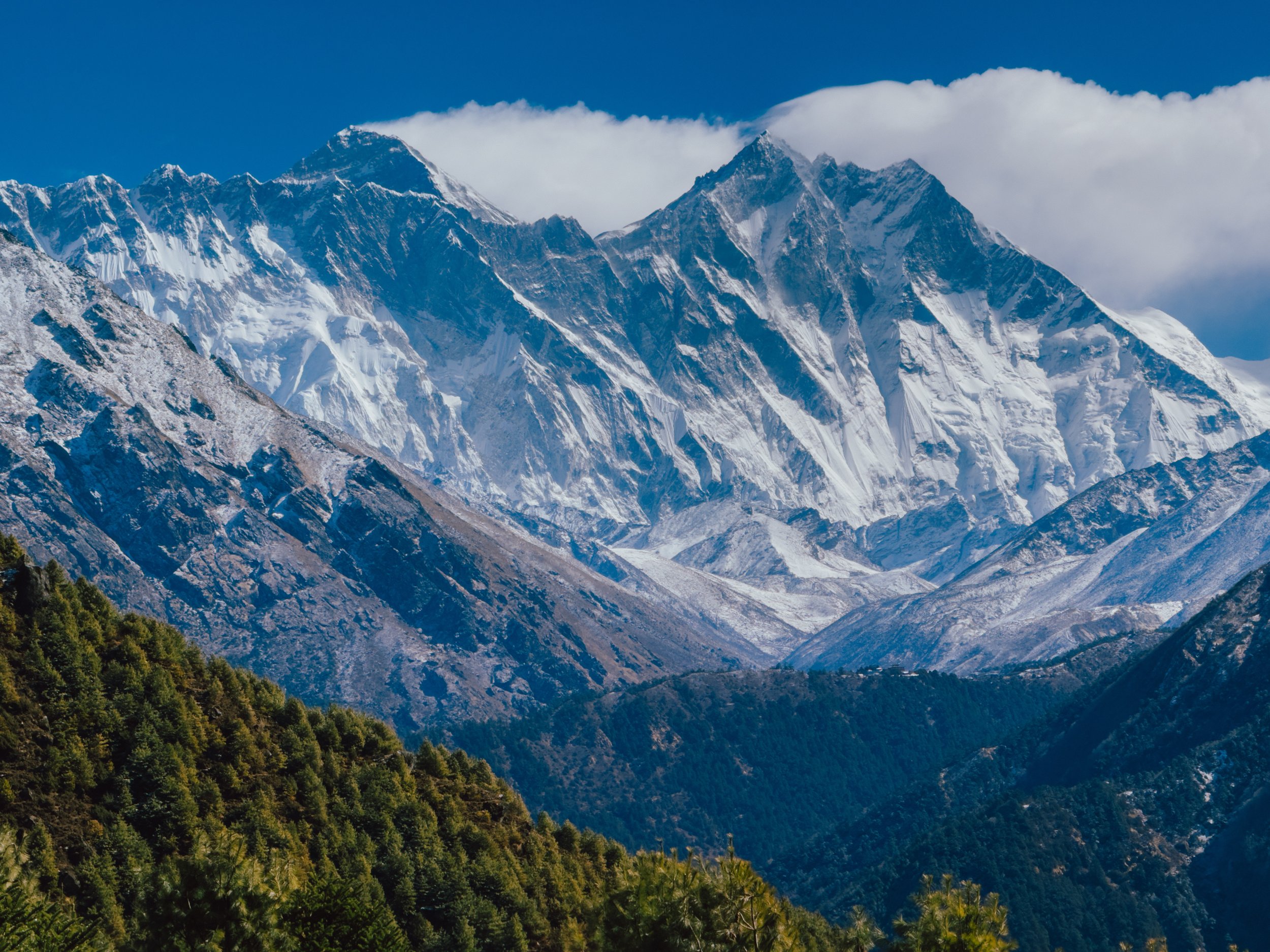
Mt. Everest and Mt. Lhotse | March 2026 | Everest Base Camp Trek
Is Everest Base Camp Trek a challenging trek?
The answer is Yes. The maximum elevation of the EBC Trek is 5346m. The journey itself takes you through a lot of ascents and descents making the net elevation gain two different places almost void as the trails and the days might feel long and challenging due to the aforementioned caveats of the trail.
There is a real risk of altitude sickness as we quicky gain elevation from the flight to Lukla at 2700m on Day 1 and reach Namche Bazaar by Day 2 which is at the height of 3440m. This quick elevation gain means that many of the trekkers might feel some form of Altitude Sickness, and hence it is very imperative to have an extra night or two of acclimatization at Namche.
Aside from the altitude, you are hiking on average of 5-6 hours per day, with a healthy mix of uphill sections. Thus, physical fitness and endurance is important. I would recommend having dedicated rest days amidst your trek days to recover and allow yourself the time to enjoy the experience rather than struggling every day.
How can I get there? Are Lukla flights safe?
The flight to Lukla is an enthralling experience. Landing on a tiny patch of steep banked runway on a small twin-otter is definitely a part of the thrill. While we did have some unfortunate events in the past, Aviation Authority of Nepal has been very strict about permitting flight operations unless the weather is clear. Hence, you have to build in buffer days in your itinerary to account for these delays and cancellations.
In peak seasons, the flights are routed from the regional airport of Rammechap which means that you take a short 4-5 hours Jeep ride from Kathmandu to the town of Manthali. There are shared Microbuses and Jeeps available that departs from Thamel every night at around 11:00pm. This would ensure that you reach Manthali to catch your flight in the morning.
For me personally, I would recommend spending a night in Manthali rather than making an overnight trip. Since we hike till Phakding or further after the flight, a proper night of rest in Manthali, makes all the difference in your energy level and first experience of the trip.
The other alternative to this journey would be a long jeep drive from Kathmandu to Salleri. This 6-7 hrs Jeep Ride through the winding Eastern Hills of the country would take us to the town of Salleri on Day 1 and we will be embarking on another Jeep ride of about 6-7 hrs to reach Surke (the final jeep point) on Day 2 to begin our hike to Phakding.
The final alternative and the premium option is to get in the Heli-flight directly from Kathmandu which might cost around 500 USD per person. Heli flights also operate in conditions that might not be feasible for flights and hence, this might mean minimal chance of delays or cancellations.
Can I pre-book accommodations by myself? What about the permits?
Yes, you absolutely can pre-book the accommodations by yourself. There are many teahouses in the Everest region who has their property listed in Booking platforms and hence you can do this online. There is abundance of accommodation choices till Dingboche and hence, you can also hike up to the village and look for accommodation which suits your requirement.
However, Lobuche and Gorakhshep requires pre-bookings. You can ask the teahouse that you are staying in at Namche or other villages, to create the bookings on your behalf. If its helpful, here are the couple of accommodation/teahouse contact details where you can contact them via WhatsApp to contact them directly for the bookings –
· Tashi Delek Guest House, Tengboche +9779810283830
· Everest View Guest House, Pangboche +9779846218820
· Royal Sishakhola Lodge, Dingboche +9779842541499
· Peak XV Lodge, Lobuche +9779843337398
· Yeti Lodge, Gorakhshep +9779861630234
I, personally stay in these lodges and they are in the descent end of the amenities available. If you are looking for something premium, I believe you can find those via booking platforms or via personal bookings through the teahouse owners as I mentioned above.
For Permits, you can do it at Lukla or Monjo (Park Entrance Gate), and requires your Passport along with NRs. 6000 (NRs. 3000 for Rural Municipality Permit and NRs. 3000 for National Park Permit).
Is Everest Base Camp a family friendly trek?
Yes, EBC is a family friendly trek. Hiking with small kids or elder folks does mean that the standard itinerary might not work for you. However, there are plenty of ways where you can shorten your hiking hours as there are villages in between.
My suggestion would be to break your standard hiking days into smaller ones. For example, instead of hiking from Tengboche to Dingboche as the standard itinerary suggests; hike from Tengboche to Somare or Pangboche, and on the next day hike to Dingboche.
A special recommendation if you are hiking with kids would be to spend an extra night at the lower villages between Lukla to Namche Bazar. I personally would recommend hiking up to Ghat in Day 1 and to Monjo in Day 2 and hike to Namche Bazar in Day 3, and spend additional 2 Nights in Namche where you can use the day to Hike up to Everest View Hotel, Everest Museum, etc. You can also use the 3rd day to Hike up to Phortse via Khumjung or spend a night at the quaint village of Khumjung instead of hiking directly towards Tengboche.
If you require a specialized itinerary with short hiking hours, esp if you are hiking with young ones or elder family members then please feel to reach out to me and I can draw up a manageable itinerary that suits your requirements.
Are kids affected by altitude sickness?
Yes, kids are susceptible to altitude sickness as much as adults. However, the main difference comes from being able to vocalize their concerns and symptoms. As much as the travel stories includes kids as young as 2 years old reaching EBC, I would advise against that. As a parent, it is up to your discretion to recognize the signs and symptoms of young kids especially if they aren’t able to give you verbal cues.
Young children have less mature internal thermal regulation, which means that they are more susceptible to cold temperature. Doing this trek with kids is possible but it does require careful preparation, emergency plan of action, expert Guidance and most importantly, highly observant parents/adults with pro-active measures (extra acclimatization nights, dedicated rest days, slow paced itinerary, extra caution in fluid intake/hydration, etc.)
There are also some unique vulnerabilities in children and elderly especially if they have recently had some respiratory tract or cold infection, making them more susceptible for High Altitude Pulmonary Edema (HAPE), which is a life-threatening, severe form of AMS. As someone who has led a number of high Himalayan family treks with young kids and elderly, there are always special considerations different from your regular standard treks.
Average Temperature in Everest Base Camp Trek during Spring and Autumn
Here is the brief tabulated average temperature of the trek based in real-time weather data from dedicated meteorological sites; Accuweather, Meteoblue and Weatherchannel derived from Gemini AI feature. The chart is based on the average temperature from 2023, 2024 and 2025.
The two locations are Namche Bazaar and Lobuche at the elevation of 3440m and 4940m. Based on the information provided above, you can plan more efficiently at the packing or your family holiday or if you are someone who wants to experience this trek in a relatively warmer temperature.
Created from weather data on Gemini AI based on last 3 years weather pattern
Based on the general consensus, April/May and September/October seems to be the ideal temperature if you don’t want to be hiking in the sub-zero temperatures.
Is Everest Base Camp safe?
Yes, and I say this confidence that the standard trails to Everest Base Camp is safe and possess minimal to no-risk of landslides, flooding or wash-out especially if you are trekking in peak months of Spring and Autumn.
The trails are rarely exposed and has enough width to allow for the Yaks & Mule caravan to pass. The trails are also well-marked and maintained. As a general reminder, the right of way is with the Yaks/Mules Caravan and Porters. Always remember to stand on the safer side (not the cliff-side) of the trail and let the entourage pass before you hit the trails.
For Altitude Sickness, there are dedicated alpine high-altitude clinics at Namche Bazar, Dingboche and Gorakhshep where they can provide emergency care. However, having a pro-active approach is a minimum and following the safe guidelines of water and food safety and hygiene, elevation gain, rest and acclimatization days is necessary to ensure your journey remains uneventful.
Is the Guide mandatory for Everest Base Camp Trek?
The short answer is No. I understand that there are conflicting information found online. Government of Nepal proposed the mandatory Guides rule some years ago but Khumbu Pasang Lhamu Rural Municipality has rejected this mandate. As of now, there are no issues doing this trek by yourself and you would not have any issues navigating the permits and checkpoints as an independent trekker.
Having a Guide to lead the trek is entirely optional and if you are well-experienced trekker with other high-altitude or high-Himalayan trekking experiences, understand your limitations, confident in managing AMS and do not mind arranging the logistics of this journey, this approach is absolutely for you. The trails are well-marked and in peak-seasons, you are never alone on the trails. Hopefully, with the contact details provided in this article you would have no problems in managing the teahouse bookings and flight/jeep transfers.
Flight Agency Contacts
Lastly, here is the contact details of the two agencies that I use most of the time for my own requirement of Flight Tickets and Jeep Reservations, Shared Jeep Transfers to Ramechap, etc. when I organize my trekking expeditions. Please note that I do not get any commissions and this is not an affiliate marketing for either of them. This is solely to navigate one of the biggest hurdles of independent trek to EBC. I know both of the operators closely due to my work and would love it if they would be able to solve the ticketing issues for you folks.
· Mr. Ganesh, WhatsApp +9779841374501
· Mr. Anish, WhatsApp +9779851318388
You can approach them on WhatsApp prior to your arrival in Nepal and book the flight tickets by yourself. They are both flight ticketing and tour agencies and should be helpful to navigate your transfers in Kathmandu/Ramechhap to Lukla and back. Both of the offices are in Thamel and hence you can visit them after you arrive to Nepal to verify your transfers and travel tickets including issues of cancellations, delays, rescheduling and refunds, etc.
