
Prepared for
the Unexpected
The mountains cannot be made risk-free. They can be approached with preparation, experience, and sound decision-making.
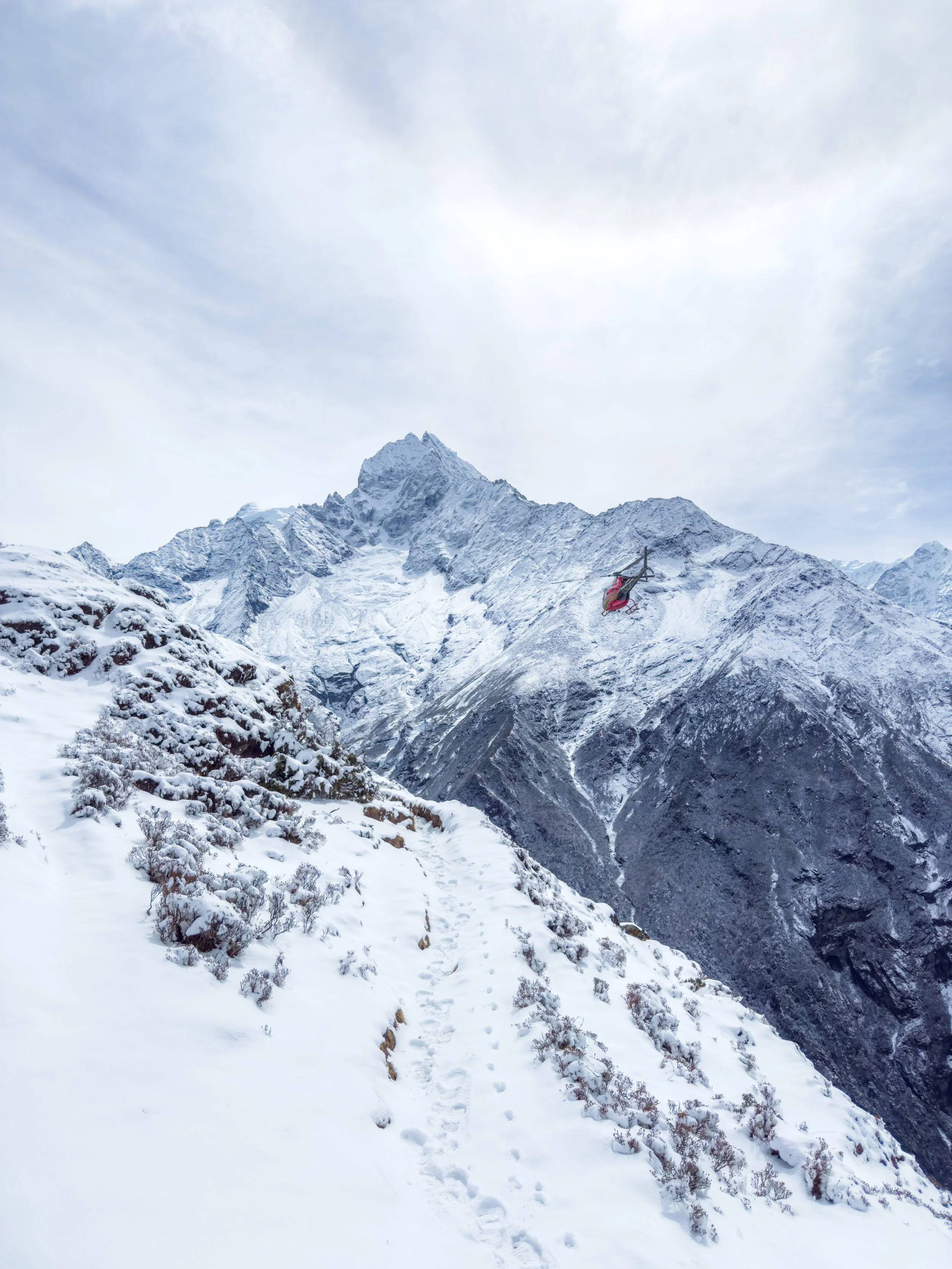
Preparation Over Promises
Mountain travel is inherently unpredictable—weather shifts, altitude affects everyone differently, and trail conditions evolve beyond any itinerary's control.
Rather than promising a risk-free journey, we focus on genuine readiness. Our safety culture is grounded in experience, continuous field assessment, and the discipline to make tough calls whenever conditions demand.
Safety Begins Before the Trail
For us, safety starts long before stepping onto the path. We rigorously evaluate trail conditions, route updates, seasonal weather patterns, communication access, medical support, and evacuation logistics.
Equally crucial is matching the journey to the trekker. We take the time to understand your experience, fitness, and preparation to ensure the itinerary aligns with your capabilities.
Safety Is a Continuous Process
Conditions in the mountains change rapidly. A trail or ridge that was clear yesterday may require a completely different approach today.
These observations continuously guide our path—whether that means taking an extra rest day, altering the daily objective, or turning around entirely.
"Completing an itinerary is never more important than making the right decision."
Our Safety Decision Protocol
Mountain safety isn't a static plan; it is a continuous, responsive cycle. We move through six structured stages to ensure every decision prioritizes group well-being.
Before the Journey Begins
Preparation begins long before reaching the trailhead. We balance understanding the individual needs of our trekkers with continuous evaluation of the route itself.
- Fitness & prior experience
- High-altitude background
- Expectations & objectives
- Medical & dietary needs
- Equipment & packing review
- Current trail conditions
- Route feasibility & access
- Weather & seasonal patterns
- Logistical & medical support
- Alternative route mapping
Continuously on the Field
Once on the trail, assessment never stops. Our field staff monitor active weather, terrain changes, group acclimatisation, pace, hydration, and overall well-being in real time.
Based on the Situation, Not the Itinerary
Observations inform our decisions. Whether that requires an extra rest day, adjusting altitude gain, changing route objectives, or turning back—decisions are made case-by-case.
Everyone Stays Informed
A safety decision is only effective when clearly communicated. We keep trekkers fully informed and coordinate seamlessly with operations staff.
"We never pressure our guides or field staff to make a decision that compromises the safety of the group or our team."
Did the Decision Work?
Taking action isn't the end. We actively measure results: Are acclimatisation symptoms resolving? Is energy returning? Are trail conditions improving? The outcome dictates our next move.
Continue, Adapt, or Reassess
Mountain conditions don't follow a fixed checklist. If the situation improves, we continue. If it remains uncertain, we allow more time. If it deteriorates, we change course.
We continue when it is appropriate to continue. We stop when stopping is the safer decision.
When Something Goes Wrong
Even with careful preparation, situations can arise that require immediate action—whether an injury, altitude-related illness, sudden weather shift, or trail hazard.
When something happens, our response follows a clear, structured pathway: stabilize the situation, protect the group, assess the facts, and determine the safest next step. Our guides adapt response decisions based on environmental severity, resources, and individual condition—never a rigid checklist.
Recognise. Report. Record.
When an incident occurs, the Guide takes immediate responsibility for the initial response. Where safe to do so, the incident is reported to company operations and documented (including observations, photographs, location, time, symptoms, or condition changes) to maintain precise situation awareness and coordinate support.
Protect the Group First
Before focusing solely on the affected individual, we ensure all other trekkers and staff remain safe. We evaluate continuing environmental hazards—such as unstable terrain, severe weather, or altitude exposure—that could put others at risk.
"An emergency response should never create a second emergency."
Treat What We Can. Understand What We Cannot.
Our Guides hold Wilderness First Aid training and provide initial care within their training scope and available field resources. While administering care, the Guide communicates symptoms and changes directly to company operations. The objective is to stabilize, observe, and gather the facts needed for a responsible decision.
Objective Evaluation
There is no predetermined outcome. Each situation is evaluated strictly on its own circumstances.
Satellite & Operational Connectivity
For remote routes, field teams carry satellite phones or satellite communicators (where permitted) to reach operations and rescue networks outside mobile coverage.
Planning for limitations: Because severe weather, terrain obstruction, or equipment bounds can impact satellite connectivity, we actively plan for communication limits rather than assuming signal availability.
Transitioning to Care
If continuing is unfeasible, the immediate focus shifts to relocating the trekker to a safer point (e.g., a teahouse or accessible junction) via local field personnel, horse/mule, ground transport, or helicopter evacuation.
Helicopter Evacuation Constraints:- Subject to weather, altitude visibility, terrain landing zones, and operational clearance.
- Reaching a suitable evacuation point in remote zones requires realistic time and field coordination.
- When required, we coordinate directly with rescue networks to expedite the process safely.
On-Ground Management
Our response continues after medical or rescue help is arranged. We maintain communication and logistics coordination across all active partners:
"Our role is to manage and coordinate the response on the ground while the traveller's insurance provider and relevant medical or rescue services handle their respective responsibilities."
EMERGENCY CONTACTS
Keeping the People Who Matter InformedBefore the journey begins, we collect nominated emergency contacts for every traveller. When serious situations arise, keeping your personal network informed is an essential part of our response.
Where the affected traveller is able to provide consent, we communicate directly with their nominated emergency contact—providing clear details on the incident, the active response, and next steps.
If a traveller is incapacitated or unable to provide consent, we contact their nominated emergency contact when reasonably necessary to protect their interests and coordinate emergency care.
If communication with personal contacts cannot be established during a critical situation, we coordinate directly with local authorities and the traveller’s embassy or consular representation.
"All emergency contact communications are strictly limited to what is reasonably necessary for the safety, health, and coordination of the situation."
HELICOPTER EVACUATION
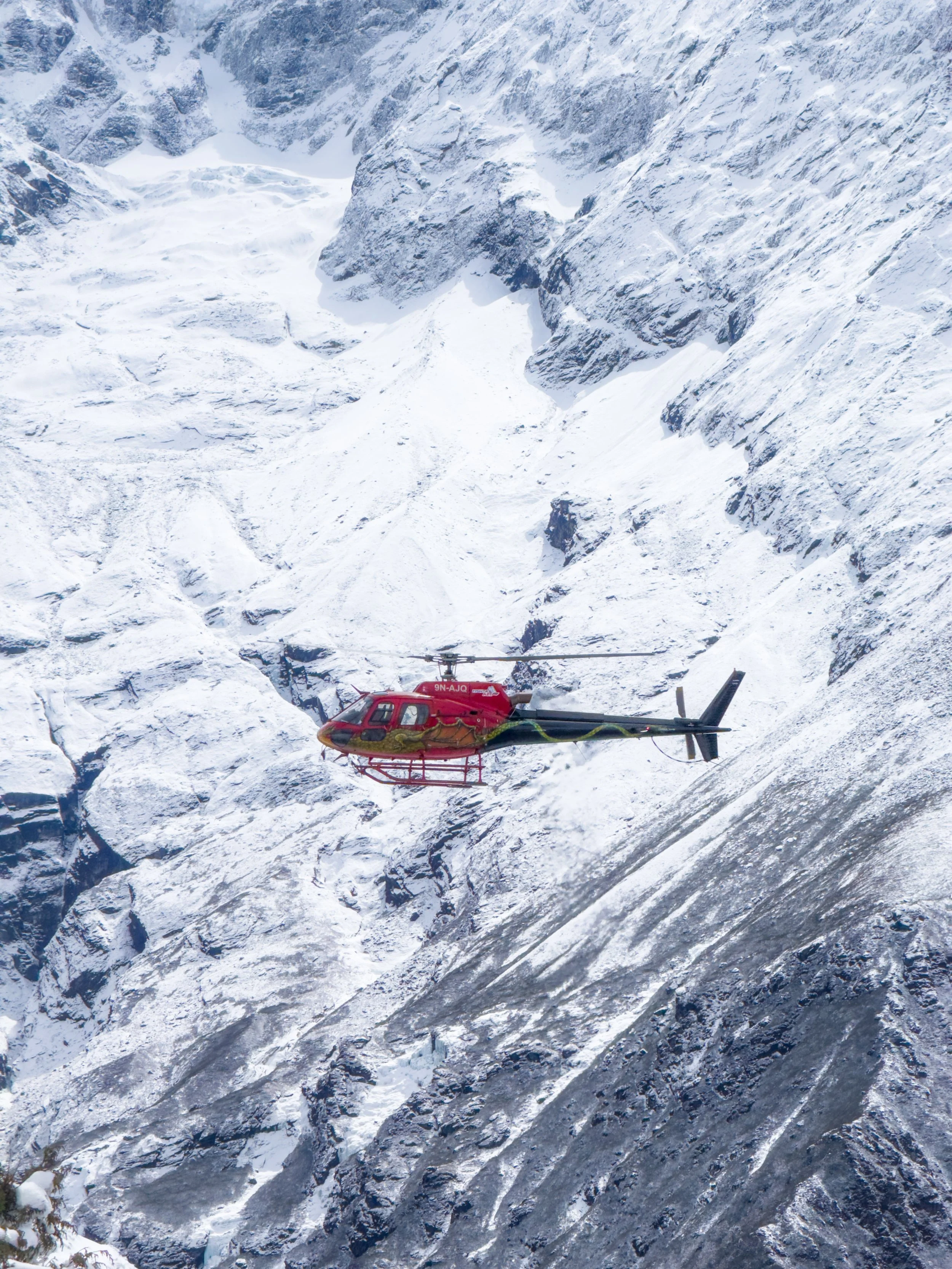
When Getting Off the Mountain Becomes the Safest OptionHelicopter evacuation can be an important part of emergency response in Nepal's remote, high-altitude regions—but it is not always the first or only option. We consider air evacuation when a serious medical condition, injury, or deterioration makes continuing or remaining at altitude unsafe, and appropriate ground treatment is insufficient.
Can the person safely continue?
Monitor condition closely with extra rest or acclimatisation if needed.
Can they safely descend or relocate on foot/ground?
- Health Posts: We utilize local health posts and qualified medical personnel where accessible.
- Medical Advice: We follow qualified medical advice to inform every evacuation step.
- Scope of Training: Guides provide Wilderness First Aid but do not diagnose or prescribe prescription drugs.
- CPR & Limits: Guides perform CPR/interventions strictly according to their specific certified credentials.
- Flight Realities: Helicopters are not urban ambulances; weather, altitude, wind, and visibility dictate flight safety.
- Delays (24–48h+): Bad weather may require waiting for suitable flying windows.
- Active Management: While waiting, we maintain shelter, first aid, monitoring, and ongoing reassessment.
- Ground Fallback: Assisted descent via porters, mules, or ground vehicles is used if safer/faster.
- Multi-Party Coordination: Connects Guide → Operations → Medical → Insurance → Heli Operator → Authorities.
- Insurance Verification: Must explicitly cover high-altitude trekking and heli-evacuation (up to 5,000m+).
- Upfront Funds: Some policies require upfront payment and reimbursement; carry emergency funds.
- Early Contact: Insurers should be contacted as early as possible in non-immediate situations.
We Do Not Recommend Helicopter Evacuation Unnecessarily
Helicopter evacuation is an emergency measure, not a service we recommend simply because it is convenient. Where a situation can be safely managed through rest, acclimatisation, medical assessment, ground evacuation, or other appropriate intervention, we consider those options first.
Given industry concerns around unnecessary helicopter evacuations in Nepal, our approach is deliberately conservative: evacuation must always have a genuine operational or medical reason. Our responsibility is to make decisions based on the safety and health of the trekker—not aircraft availability.
When Every Decision Matters
In the mountains, emergency response is rarely about one decision made in isolation. It is about preparation, assessment, communication, and knowing when the safest course is to continue, change direction, or help someone get off the mountain.
ALTITUDE SAFETY
Respecting What Altitude DemandsAltitude affects everyone differently. Fitness, experience, hydration, sleep, acclimatisation, and pace all influence how a trekker responds as they climb higher. We do not treat altitude as a fixed number on an itinerary—we treat it as a dynamic factor requiring continuous observation.
"Altitude Is Not a Test of Willpower."
Knowing when to slow down, rest, descend, or stop is not failure. It is an essential part of travelling responsibly and safely in high-altitude environments.
Give the Body Time to Adapt
Acclimatisation cannot be rushed. Our itineraries provide structured elevation profiles and rest periods. However, the itinerary is only a framework—our actual pace adjusts dynamically to how the group responds. A slower day is always better than a forced day.
Paying Attention to the Person
We continuously observe key indicators, encouraging open dialogue at every stage:
Small Things Matter at Elevation
The body works significantly harder at altitude. Guides encourage regular fluid intake, monitor energy levels, and adjust meal recommendations based on individual condition and appetite rather than forcing a rigid routine.
Rest Is Part of the Journey
Poor sleep compounds fatigue and hinders acclimatisation. We assess recovery after every leg. If persistent fatigue or poor sleep develops, we recommend additional rest, a slower pace, or an easier day before ascending higher.
Immediate Response Pathway
When altitude symptoms arise, we stop and evaluate:
Going higher is not always the right way forward.
Recognising Medical Emergencies
Conditions like High-Altitude Cerebral Edema (HACE) and High-Altitude Pulmonary Edema (HAPE) require immediate action. Suspected severe illness makes descent and medical care absolute priority over any itinerary.
Emergency Contacts
Keep These Numbers Within ReachWhen travelling in Nepal, especially in remote mountain regions, it is essential to have key emergency numbers accessible—even when trekking independently.
Direct team line for journeys. Coordinates guides, operations, and regional emergency services.
National control center for immediate police response, safety threats, or criminal incidents.
Specialised hotline for search, rescue, and natural disaster operations (landslides, floods).
Dedicated assistance for international visitors handling security concerns or travel authority support.
If You Feel Unsafe
At Darchog, we believe that everyone travelling with us, working alongside us, and living in the mountain communities we visit deserves to be treated with dignity and respect.
If you experience abuse, harassment, threatening behaviour, discrimination, exploitation, or any conduct that compromises your safety, please reach out to our team immediately so we can assist and connect with authorities where necessary.
• For immediate personal threats or active crimes, dial Nepal Police on 100 directly.
• For tourist-specific safety issues or formal complaints, contact Tourist Police on 1144.
Travel With Confidence.
We cannot control the mountains, the weather or every circumstance we may encounter. We can control how we prepare for them, how we respond when things change, and how carefully we make decisions along the way.
Tell us where you want to go. We'll help you understand what it takes to get there.