
Kanchenjunga Circuit Trek Difficulty
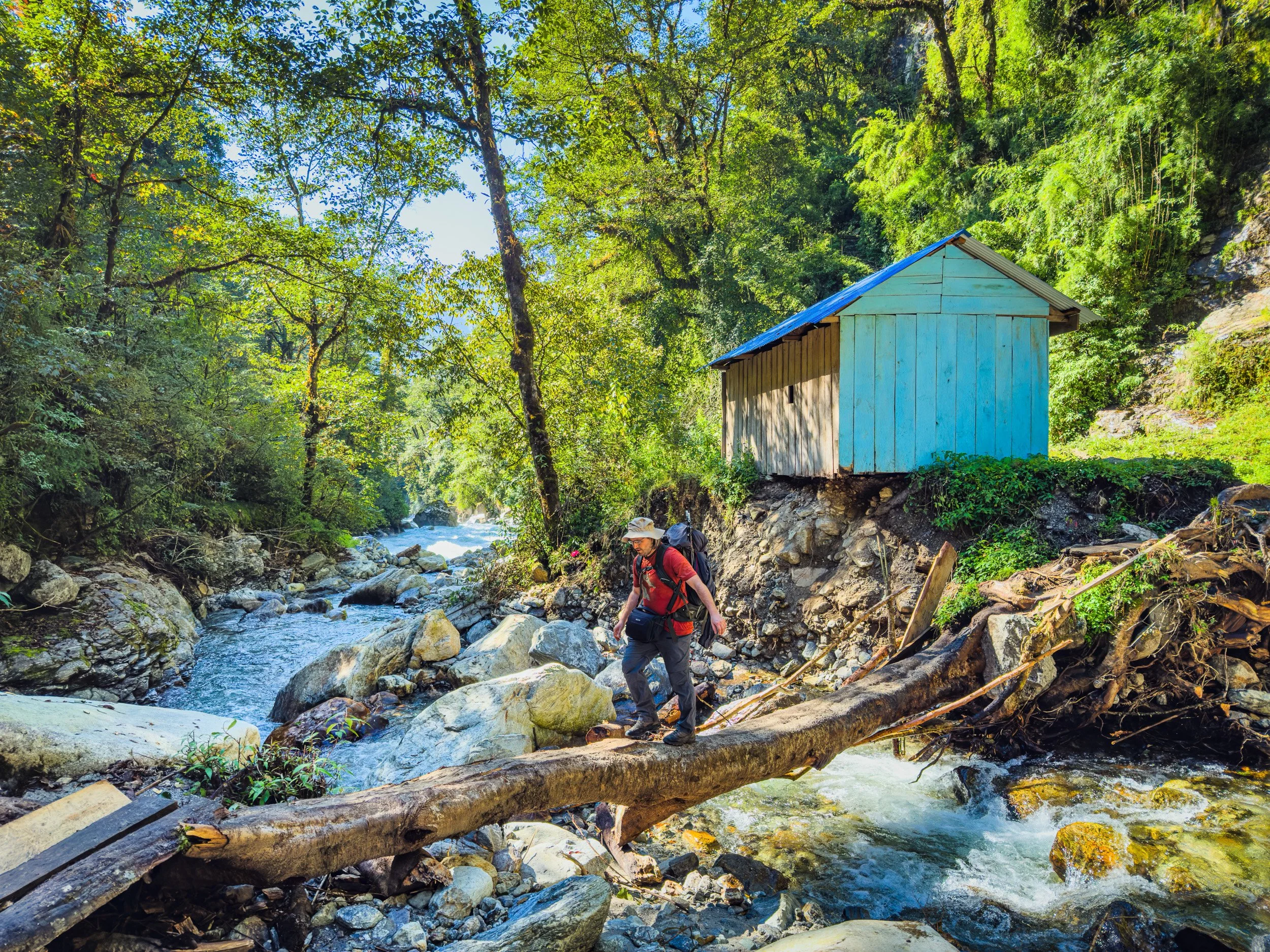
Enroute Gyabla as the monsoon of 2025 washed away the main trail, enroute Kanchenjunga Circuit Trek from Thangyam.
While Nepal doesn’t have the official trail grading system, Kanchenjunga Circuit Trek can be categorized as Moderate to Strenuous due to couple of factors such as Altitude, Hiking Distance, Trail Conditions, Amenities and Accessibility, etc.
I have identified the following reasons for our grading of Kanchenjunga Circuit Trek as Moderate to Strenuous difficulty,
1. Remote and Isolated Region
Kanchenjunga’s extreme remoteness implies that there is no road access beyond the trailheads, and evacuation can require helicopter rescue. This isolation means fewer and basic facilities, unreliable phone coverage for many days and minimal infrastructure compared to other trekking regions such as Everest or Annapurna. Our journey to the trail head requires a 45 minutes flight to Bhadrapur and additional approx. 1.5 days of Jeep travel to reach the trail head of Sekathum.
2. Long Duration and High Commitment
Kanchenjunga Circuit Trek itinerary runs for minimum of 21-24 days, requiring sustained physical and mental endurance. Unlike shorter treks that allow quick exits, Kanchenjunga demands you commit to nearly three weeks of remote travel with no easy exit once you're deep in the circuit.
3. High Altitude Exposure
We sleep several nights above 4000 m, as high as 4800 m (Lhonak) and visit to North Base Camp at 5140 m. Prolonged time at altitude increases the risk of AMS (Acute Mountain Sickness), and there are no major medical facilities—making acclimatization and health monitoring critical for this trek.
4. Rugged Terrain and Long Daily Distances
Some section of the trails have steep ascents, descents, landslide zones, narrow cliff-side trails, and long daily stages (sometimes 6–9 hours of pure hiking). This ruggedness of the trail paired with longer hiking hours makes this a strenuous trek.
5. Minimal Teahouse Infrastructure
The quality of the teahouses is basic and minimal. While the locals have strived to construct insulated rooms and provide a comfortable experience, you would find the rooms to be basic. However, you would find comfortable mattress and warm blankets for your perusal. This also means that there are limited Western style toilets on the trail and no provision of ensuite Washrooms. Also, the lack of laundry and hot shower facilities (only bucket showers available) except Ghunsa, makes this trek a rather rustic experience.
6. Weather Challenges and Pass Crossings
While Selele pass is relatively lower in elevation, weather variability complicates planning and increases the need for flexibility and resilience. We have traversed the pass in 12-18 inches of snow and it genuinely feels like a slow progress requiring mental fortitude and physical endurance. In adverse weather conditions, the access to Basecamp might be blocked due to heavy snowfall and hence it is imperative to plan the right time for the trek.
7. Logistical Complexity and Permits
Kanchenjunga is a restricted area, requiring a special permit and a registered guide. Trekkers must plan around bureaucratic processes, ensure proper insurance covering helicopter evacuation, and navigate multiple ground and air transfers to the remote starting point. Usually this is taken care by the Trek organizers like ourselves so that you can focus completely on your journey.
Recommended Prerequisites for Participants for Kanchenjunga Circuit Trek
· High-Altitude Trekking Experience
While not mandatory, it is immensely helpful if you have high altitude trekking experiences preferably over 4000-5000 meters such as Patagonia or Peru or 14ers in Colorado, etc. Prior experience of multi day treks in rustic and rugged outdoors would be beneficial to prepare you mentally for the trek as well as understand how your body reacts to high altitude environment.
· Excellent Physical Fitness
Trekkers should be comfortable with long days (6–9 hours), carrying a daypack over rugged, steep terrain, and managing significant elevation gains/losses. Baseline cardiovascular fitness and hiking practice are essential along with training regime focused on Hip/Ankle Mobility, Core Strength and Endurance to cope with rugged trails and low oxygen environment.
· Mental Resilience and Adaptability
Participants need to be comfortable with discomfort: cold temperatures, no internet, basic sanitation, and the unpredictability of remote travel. Mental preparedness for detours, and delays is critical. It is also important to focus on the overall journey and the challenges perceiving it as a part of the experience.
· Adequate Gear and Clothing
Good-quality sleeping bags (-15 °C/-20 °C rated), layers for sub-zero nights, durable boots, and personal medications are non-negotiable. Our packing list is comprehensive to ensure that you have all the necessary gears and equipment for this trek.
· Insurance with High-Altitude Evacuation
With the remote nature of the trek, High Altitude Trekking Insurance with Helicopter evacuation is a must have for this trek. This might also mean that in some cases Insurance provider has a higher premium for this type of outdoor adventure.
· Travel Flexibility and Buffer Days
We also recommend to have 3-4 buffer days to handle weather delays, transport breakdowns, or acclimatization needs. Completing this trek in tight itineraries might instigate rushed approaches and thus, ruining your experience and added risks of Altitude Sickness or Injuries on the trail.
In summary, I rate the Kanchenjunga Circuit Trek as one of Nepal’s most rewarding trekking routes, best for highly experienced trekkers with excellent fitness, strong mental fortitude, and thorough logistical preparation. On the flip side, due to these perceived barriers of entry to the region understand why Kanchenjunga is a perfect alternative to Everest, Annapurna or Manaslu region.
Why Kanchenjunga Circuit Trek Offers a More Authentic and Pristine Experience?
1. Extreme Remoteness Preserves Natural Beauty
The isolation that makes it logistically challenging also keeps the landscape untouched. With no roads beyond the trailhead and very limited development, trekkers walk through wild, unspoiled Himalayan valleys, dense forests, and high-altitude alpine terrain where nature dominates.
2. Very Low Crowds = Solitude and Intimacy
Unlike Everest or Annapurna or even Manaslu at this time, which see tens of thousands of trekkers annually, Kanchenjunga gets less than 800. This means no crowded trails, no lines at viewpoints, and a rare chance to experience true wilderness in solitude, enhancing immersion and personal reflection.
3. Lack of Commercialisation = Authentic Local Culture
Because of minimal tourism infrastructure, the villages remain traditional and welcoming. Small, family-run teahouses (where they exist) offer genuine hospitality, preserving local customs without the mass-tourism polish seen on other popular routes.
4. Camping/Tent Style Expedition = Deep Outdoor Experience
With our added Experience of Wilderness Camping, alternate to teahouse trek, it deepens the sense of adventure. Nights under the stars, meals cooked at camp, and self-reliance make this a real expedition, far removed from lodge-to-lodge luxury, and closer to classic exploration.
5. Untouched Biodiversity
The remoteness has preserved the region’s incredible wildlife. With luck, you may spot elusive Red Pandas, Blue Sheep, or even Snow Leopards, along with forests of Himalayan Birch, Rhododendron, and bamboo that remain largely undisturbed by human impact.
6. Spiritual and Cultural Significance
For locals, Kanchenjunga is sacred—a spiritual focal point of the Himalayas. Less-developed tourism means trekkers can meaningfully engage with these beliefs without the superficial performances seen in more commercial areas.
7. Challenging Passes and High Altitude = Rewarding Achievement
Crossing Selele Pass and reaching both North and South Base Camps require real effort. This difficulty keeps casual tourists away, ensuring that those who do complete it have earned the experience, deepening the personal satisfaction and authenticity of the journey.
8. Limited Connectivity = Digital Detox
Days without internet or cell coverage enforce a true break from modern distractions. Instead of scrolling a screen, trekkers connect with the landscape, fellow hikers, and local communities on a more meaningful level.
What makes Kanchenjunga Circuit Trek “difficult” also makes it one of the most authentic, pristine, and rewarding Himalayan adventures—a rare chance to experience raw wilderness, rich culture, and genuine solitude away from the crowds and comforts of mass tourism.
To know more about this amazing trek and how we organize this trip, please feel free to visit our dedicated Kanchenjunga Circuit Trek page for itinerary details and other essential information.
