
Accommodation and Food on the Kanchenjunga Circuit Trek
Accommodation & Food on the Kanchenjunga Circuit
Basic, Comfortable and Remote
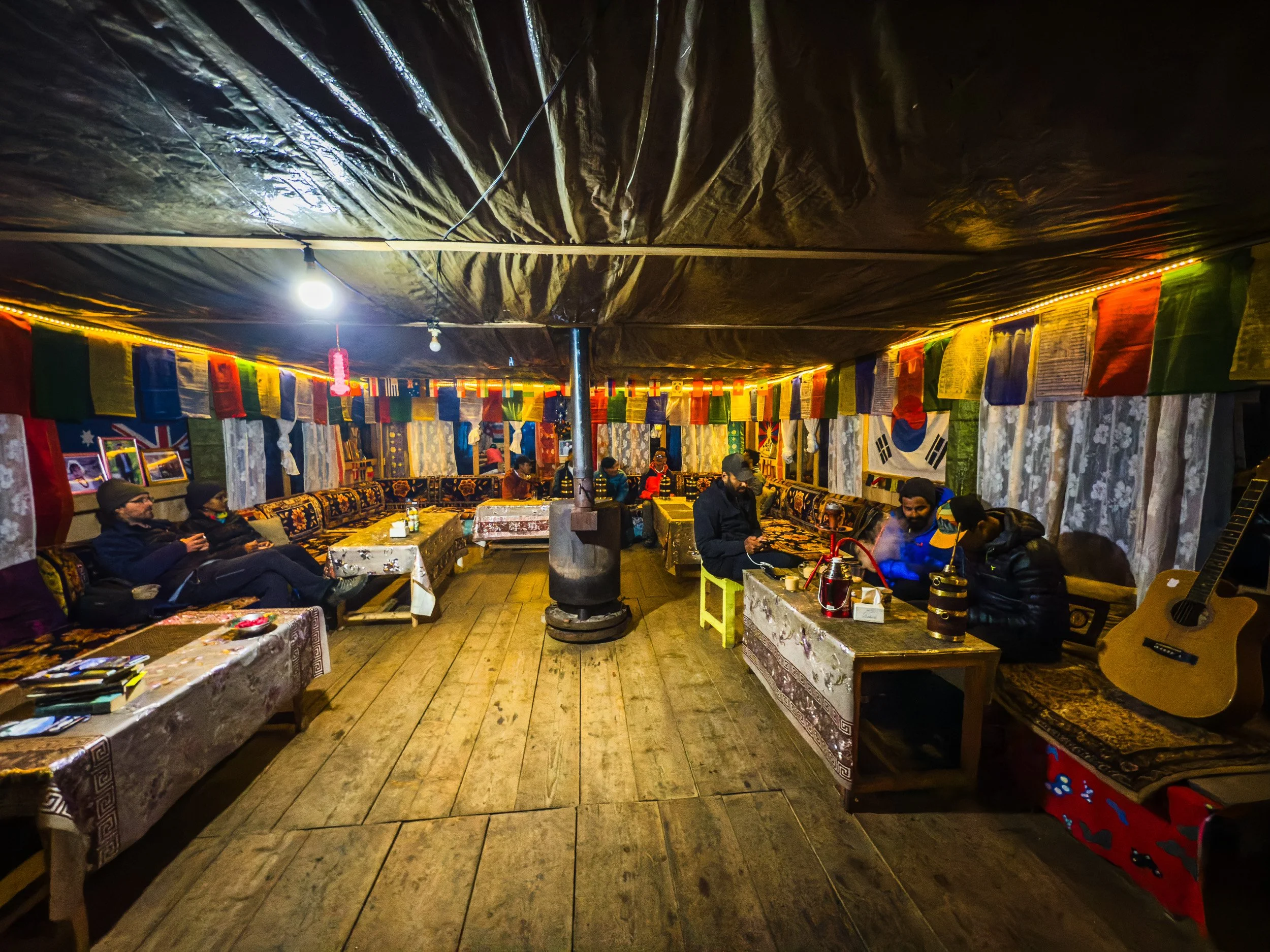
Teahouse Dining Hall in the village of Ghunsa, with a warm fire place, basic and comfortable, Kanchenjunga Circuit Trek
|
Accommodation
|
|
|---|---|
|
Food & Dining
|
|
The teahouses on the Kanchenjunga Circuit Trek are generally basic but comfortable enough for a long day on the trail.
Most rooms have:
A proper bed
Mattress
Blankets
Basic bedding
Shared toilet facilities
Bathrooms may be inside the same building or outside, depending on the village and teahouse.
You should not expect ensuite bathrooms or the level of facilities found on more commercial trekking routes.
As we move higher and further into the Kanchenjunga Conservation Area, facilities become increasingly simple. This is one of the realities of trekking in a remote region with limited infrastructure.
Ghunsa: The Most Developed Stop
Ghunsa has some of the better accommodation options along the route.
This is where you will find facilities such as:
Hot showers at selected teahouses
Better dining facilities
More reliable electricity
Laundry services at some properties
Small cafés and bakeries
One of the places I particularly like is Dzongla Guest House, which has even developed a small café and bakery.
For our journeys, we generally stay at Jannu Guest House in Ghunsa.
Staying Warm in the Mountains
The dining rooms are generally heated by a central fire or stove, particularly in the colder sections of the trek.
After a long day outside, this often becomes the warmest and most social place in the teahouse. Rather than retreating immediately to your room, you will usually find trekkers, guides and local staff gathered around the kitchen fire, sharing stories and simply enjoying the warmth.
This is one of those small experiences that doesn't appear on an itinerary but becomes part of the journey.
At some teahouses in Ghunsa, laundry facilities are also available. However, their operation can depend on the capacity of the local hydropower system, so I would not rely on being able to wash clothes whenever you want.
Electricity and Charging
Electricity becomes increasingly limited as we travel deeper into the Kanchenjunga Circuit.
Some teahouses have charging ports inside the rooms, but this is not something I would expect throughout the trek.
Above the more developed villages, most electricity comes from solar power, and charging facilities can be limited or unavailable.
This is one reason I recommend treating your power bank as essential trekking equipment, rather than assuming you will be able to recharge your devices every evening.
For a detailed breakdown of what I recommend carrying, see our Kanchenjunga Packing List.
Food on the Kanchenjunga Circuit
Simple, Vegetarian and Surprisingly Good
Food on the Kanchenjunga Circuit is generally vegetarian, and in my experience, there is often a greater variety of greens and vegetables than I have encountered on some other trekking routes in Nepal.
The menus remain relatively simple, but you can expect familiar trekking meals such as:
Dal Bhat
Fried rice
Noodles
Pasta
Soups
Eggs
Cheese
Potatoes
Seasonal vegetables
The main sources of protein are generally eggs and cheese.
This is something worth considering if you are someone who requires a higher protein intake during a long trek.
What About Meat?
I would be cautious with meat on a remote trek like Kanchenjunga.
Fresh meat can sometimes be available when an animal has been freshly butchered locally, but refrigerated meat transported over long distances is not something I would recommend relying on.
Dried and aged yak sukuti can occasionally be found, but it is relatively uncommon and certainly isn't something that will appeal to everyone.
For this reason, I generally prefer to keep our meals simple and vegetarian unless there is a reliable local source of fresh meat.
Snacks and Additional Protein
I recommend bringing some of your preferred snacks from Kathmandu, particularly if you have specific nutritional requirements.
Energy bars, nuts, chocolate, electrolyte products and protein supplements can be useful during the longer and more physically demanding days.
Some snacks can be purchased from teahouses in places such as Ghunsa, but prices become considerably higher once we are deeper into the mountains.
I've also had clients bring their own protein powder to supplement their daily protein intake.
If you have a specific dietary requirement, I would rather know about it before the trek so that we can plan accordingly.
Food & Accommodation at a Glance
I think this would work particularly well as a visual fact sheet on the page:
AccommodationFoodBasic but comfortable teahousesMostly vegetarianBed, mattress & blankets providedDal Bhat, pasta, noodles & fried riceShared bathroomsEggs & cheese are main protein sourcesHot showers available in selected teahousesFresh meat only where locally availableBetter facilities in GhunsaYak sukuti occasionally availableLimited charging at higher elevationsBring preferred snacks & supplementsSolar power in remote sectionsPrices increase at higher elevations
What Should You Expect?
The simplest way I can describe accommodation and food on the Kanchenjunga Circuit Trek is this:
Come prepared for comfort, not luxury.
You will have a warm place to sleep, a bed, blankets, hot food and a dining room where you can recover after a long day. But you will also experience shared bathrooms, limited electricity, simple menus and increasingly basic facilities as we move deeper into the mountains.
And honestly, I think that is part of the reason Kanchenjunga still feels like Kanchenjunga.
The region has not been developed around the expectations of mass tourism. The facilities exist to support people living and travelling through these mountains, rather than to recreate the comforts of a city hotel at altitude.
For a remote wilderness trek, simple, clean and functional is often exactly what we need.
Practical Preparation
Before leaving Kathmandu, make sure you would have:
A 20,000 mAh power bank or two 10,000 mAh units
Your preferred energy bars and snacks
Electrolytes
Protein supplements if required
A suitable sleeping system and warm layers (Sleeping Bag or Sleeping Bag liner)
Headlamp with spare batteries
Charging cables and adapters
For the complete equipment recommendations, continue to our Kanchenjunga Circuit Trek Packing List.
And if you're planning your budget, remember that food, accommodation, charging and other small services can become more expensive as we move deeper into the region. Our Kanchenjunga Circuit Trek Cost Guide breaks down these additional expenses in more detail.
