
Best Time to do the Kanchenjunga Circuit Trek
Best Time to Do the Kanchenjunga Circuit Trek
The Kanchenjunga Circuit Trek is one of Nepal's most remote trekking experiences, and with fewer than 1,000 visitors making the journey each year, solitude remains one of its defining characteristics. Even during the main trekking seasons, you are unlikely to experience the crowds found on the Everest Base Camp or Annapurna Circuit trails. You may occasionally encounter larger camping groups, particularly trekkers completing sections of the Great Himalayan Trail, but the overall character of the journey remains quiet, remote and remarkably peaceful.
Choosing the best time for the Kanchenjunga Circuit Trek, however, is about more than avoiding rain or finding clear mountain views. Weather affects trail conditions, river crossings, landslide-prone sections, high passes, accommodation and even access to some of the more remote villages. From my experience in the region, spring and autumn offer the most reliable conditions, while early and late-season trekking can provide a very different experience for those prepared for more variable conditions.
Weather Summary of Kanchenjunga Circuit Trek
Based on meteorological data models (Meteoblue, Mountain-Forecast, & Climate-Data records).
| Spring(Mar – May) | 8°C to 25°C Day Avg: 20°C–23°C | Night Avg: 10°C–14°C | Precipitation Moderate (30–75 mm/mo in Mar/Apr). Increases to ~180–250 mm by late May. |
|---|---|---|
| Autumn(Sep – Nov) | 7°C to 24°C Day Avg: 18°C–22°C | Night Avg: 9°C–14°C | Precipitation Heavy in early Sep (~250–320 mm). Drops sharply in Oct (45–70 mm) & Nov (10–20 mm). |
| Spring(Mar – May) | -6°C to 14°C Day Avg: 5°C–10°C | Night Avg: -4°C to 1°C | Precipitation Rain & snow mix. Mar–Apr snow (30–60 mm equiv). May rainfall increases (80–120 mm). |
|---|---|---|
| Autumn(Sep – Nov) | -8°C to 13°C Day Avg: 3°C–9°C | Night Avg: -5°C to 2°C | Precipitation Sep fog & moisture (100–150 mm). Mostly clear Oct (15–30 mm). Very dry Nov (10–15 mm). |
| Spring(Mar – May) | -16°C to 6°C Day Avg: -1°C to 3°C | Night Avg: -12°C to -6°C | Precipitation Exclusively snowfall. Mar–Apr wind/snow squalls (25–50 mm). Late May moisture (60–90 mm). |
|---|---|---|
| Autumn(Sep – Nov) | -18°C to 6°C Day Avg: -2°C to 3°C | Night Avg: -13°C to -4°C | Precipitation Residual Sep snow (60–90 mm). Clear Oct (10–20 mm). Extremely cold & windy Nov (5–15 mm). |
Trekking Season Overview
Best operational windows, primary advantages, and key route considerations.
|
Spring
Late March–April
|
Main Advantage Rhododendrons, greenery, warming temperatures | Main Consideration Lingering winter snow early in the season |
|---|---|---|
|
Autumn
October–November
|
Main Advantage Clear skies, stable weather, comfortable temperatures | Main Consideration Colder towards November |
|
Monsoon
June–September
|
Main Advantage Lush landscapes, fewer trekkers | Main Consideration Rain, landslides, floods and unstable trails |
|
Winter
Late Nov–Feb
|
Main Advantage Extreme solitude, winter landscapes | Main Consideration Snow, cold and closed teahouses |
Autumn: October to November
The Best Overall Season for Kanchenjunga
If I had to choose one period for the Kanchenjunga Circuit Trek, I would aim for the first to second week of October onwards.
By this time, the post-monsoon rainfall has generally subsided, the skies begin to clear and the weather becomes considerably more stable. This is particularly important on Kanchenjunga because several lower sections of the trail are vulnerable to landslides, flooding and temporary trail damage during the monsoon.
October also brings relatively calm weather and comfortable temperatures compared with the colder months that follow.
October to November is one of the best periods to experience the Kanchenjunga region.
If your priority is:
Clear mountain views
More stable weather
Safer lower-elevation trails
Comfortable trekking temperatures
Crisp autumn landscapes
then October is my first recommendation.
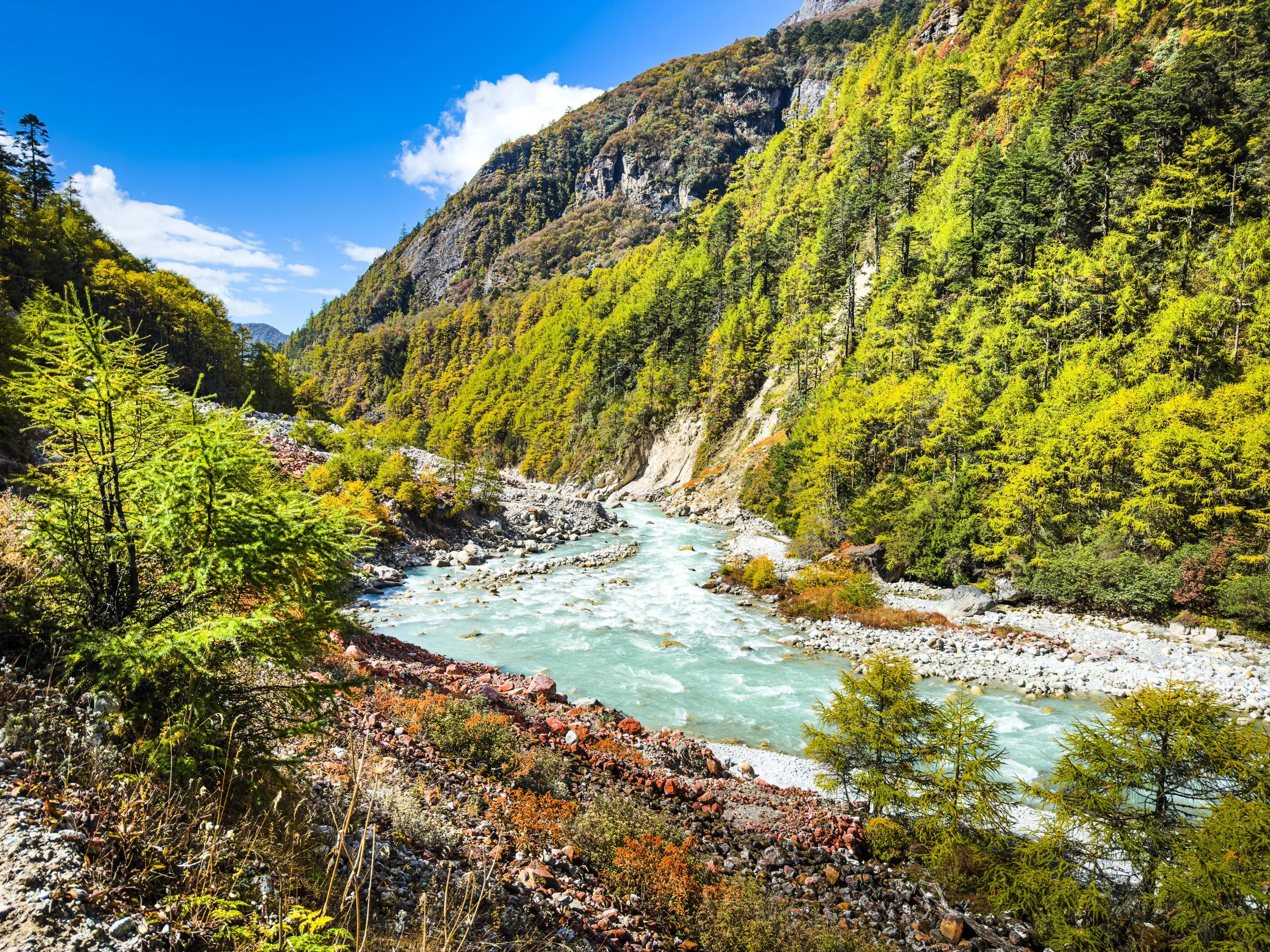
Autumn in Kanchenjunga Circuit Trek, enroute Khambacchen to Ghunsa, fall colors, 2025
Early October vs Late October
There is a subtle difference even within autumn.
Early to mid-October can retain some of the lushness left behind by the monsoon. The vegetation is greener, forests are vibrant and the landscape feels particularly rich.
Late October to November tends to become drier and colder, with increasingly crisp conditions at higher elevations.
For me, early to mid-October offers one of the best balances between landscape, temperature and trail conditions.
Spring: Late March to April
Rhododendrons, Green Landscapes and Returning Life
Spring is another excellent season for the Kanchenjunga Circuit Trek, particularly from late March through April.
The lower elevations become noticeably warmer while the forests begin to transform. Rhododendrons bloom across the hills, vegetation becomes increasingly green and the landscape gradually emerges from winter.
5
The traditional spring window can be considered March through April, but I personally prefer mid to late March and April.
The reason is simple: early spring can still carry remnants of winter.
In recent years, winter snowfall has sometimes extended into late February and early March, affecting the higher elevations into mid-March. This means that trekkers starting too early in the season may encounter lingering snow and colder conditions around the high passes.
By late March and April, conditions generally become more favourable.
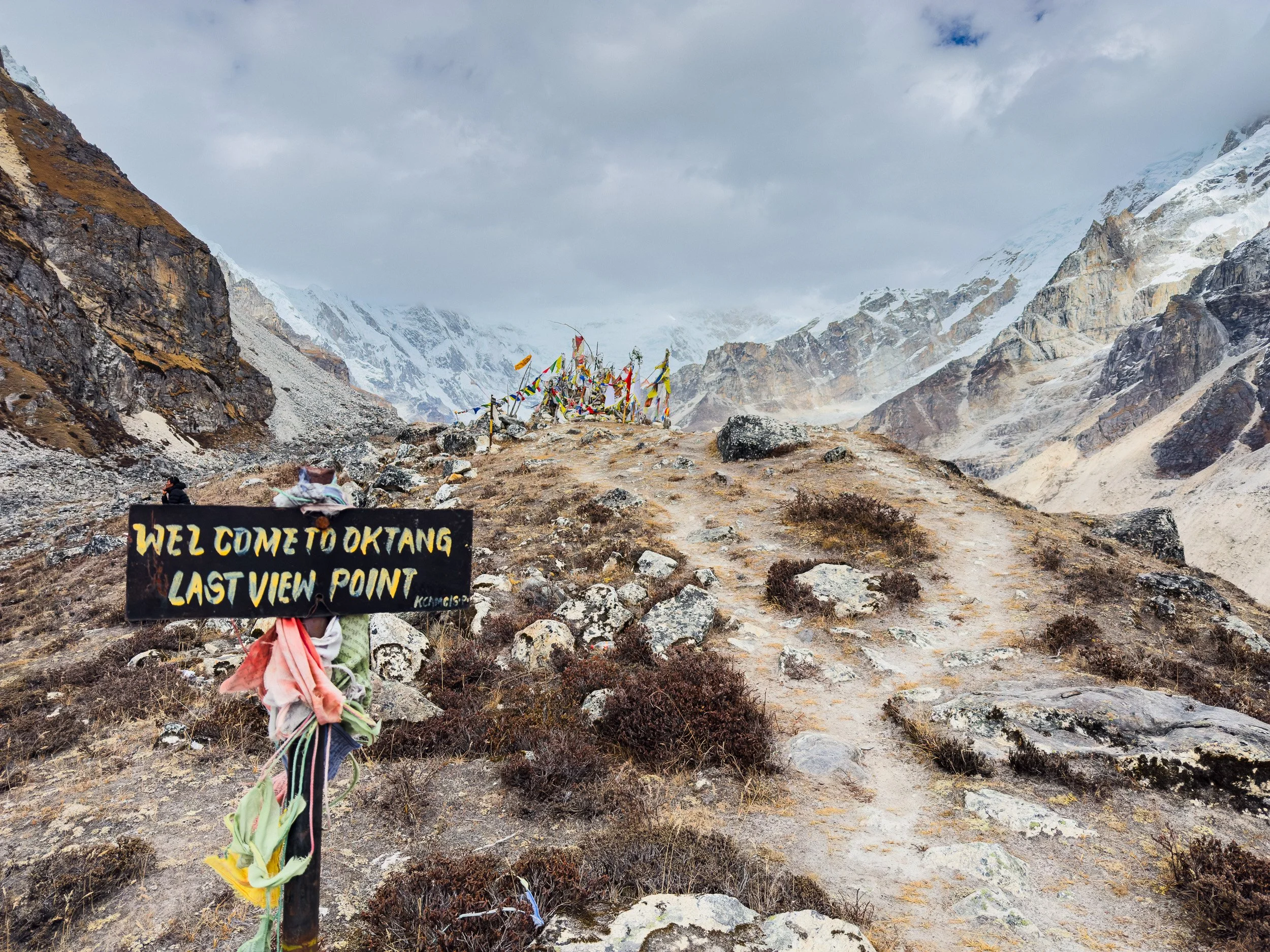
Oktang View Point, Kanchenjunga South Base Camp in post-monsoon period, early Autumn 2025
Why Choose Spring?
Spring is particularly attractive if you want:
Rhododendron blooms
Green and increasingly lush landscapes
Warmer lower elevations
Clear mountain scenery
A transition from winter into the trekking season
It is also a beautiful time for photography, particularly through the forested sections of the Kanchenjunga Conservation Area.
Monsoon: June to September
Possible, But Not My First Recommendation
The Kanchenjunga Circuit Trek during monsoon is possible, but I would not recommend it as the preferred season.
The main concern isn't necessarily the weather at the higher elevations. It is the condition of the lower trekking trails.
Heavy rainfall can trigger:
Landslides
Flooding
Damaged bridges
Temporary trail diversions
Unstable river crossings
Muddy and slippery trails
The 2025 monsoon demonstrated how quickly conditions can change. Sections around Itahari, Lamatar, Tortongden and the route towards Ranipul and Yamphudin experienced significant damage, including washed-out trails and bridges.
The higher sections of the trek are generally less affected by these particular problems, but reaching and leaving those higher elevations requires travelling through the lower valleys first.
For this reason, monsoon trekking in Kanchenjunga is more of a calculated decision than a straightforward recommendation.
If someone is considering the trek during this period, I would want to assess the current trail situation rather than relying solely on an old itinerary.
Winter: Late November to February
A Different Kanchenjunga Experience
Winter is the least conventional season for the Kanchenjunga Circuit Trek.
By late November and December, temperatures drop significantly, snowfall becomes increasingly likely at higher elevations and many teahouses begin closing for the winter.
That does not necessarily mean the trek is impossible.
I have personally travelled through the region during the colder months and experienced situations where teahouse owners have provided us with keys to their closed properties. We were able to open the teahouse, cook, stay overnight and continue the journey.
This is one of the practical advantages of having long-standing relationships with local teahouse owners.
However, this should not be interpreted as a guarantee that accommodation will be available in winter. It requires advance planning and flexibility.
For most trekkers, I would recommend choosing spring or autumn instead.
For experienced trekkers specifically seeking a quieter and more demanding winter experience, however, Kanchenjunga can still be considered with appropriate preparation.
Guide’s Note
I've travelled through Kanchenjunga in different seasons, including periods with heavy snow and colder late-autumn conditions. What I've learned is that the "best time" isn't simply about looking at a calendar.
It is about understanding what the mountain is doing that year.
A particularly heavy monsoon can leave trails unstable well into autumn. An extended winter can leave snow on the high passes into early spring. Occasionally, unusual weather systems can disrupt even an otherwise favourable season.
That is why I prefer to keep the itinerary flexible and make decisions based on actual trail and weather conditions, rather than forcing the mountain to follow a predetermined schedule.
And that, in my opinion, is particularly important on a trek as remote as Kanchenjunga.
Final Thoughts
There is no single month that guarantees perfect conditions in the Kanchenjunga Circuit Trek. The mountains remain unpredictable, and every season brings its own character to the trail. From my experience, however, late March to April and October to November offer the best overall conditions, with early to mid-October being my preferred period for a balance of clear skies, stable weather and better trail conditions.
Ready to explore Kanchenjunga? If remote trails, high mountain passes, and genuine solitude are what you're looking for, get in touch to start planning your expedition.
Explore Kanchenjunga Circuit Trek